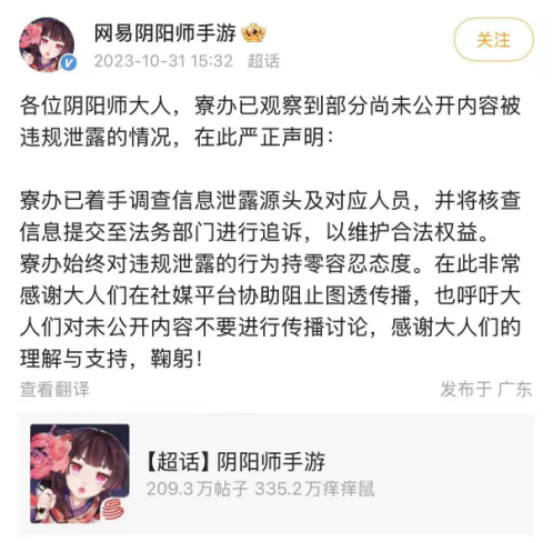
During the launch of new game versions, internal testing versions and early-access test servers that disclose game content in advance have become important measures adopted by many game developers prior to official updates. Such mechanisms not only help game companies collect player feedback on game content—such as identifying potential bugs or unreasonable mechanics—but also provide a basis for subsequent optimization and adjustment, ultimately enabling the release of more polished final versions. However, in this process, the confidentiality of game content has gradually become a core issue that game companies must take seriously.
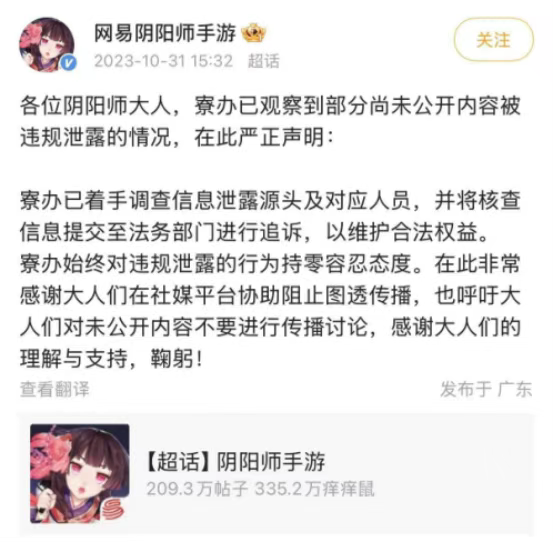
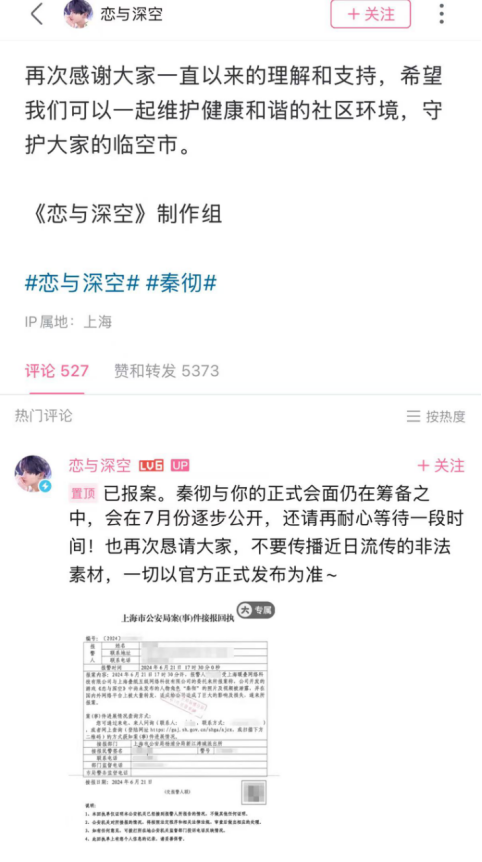
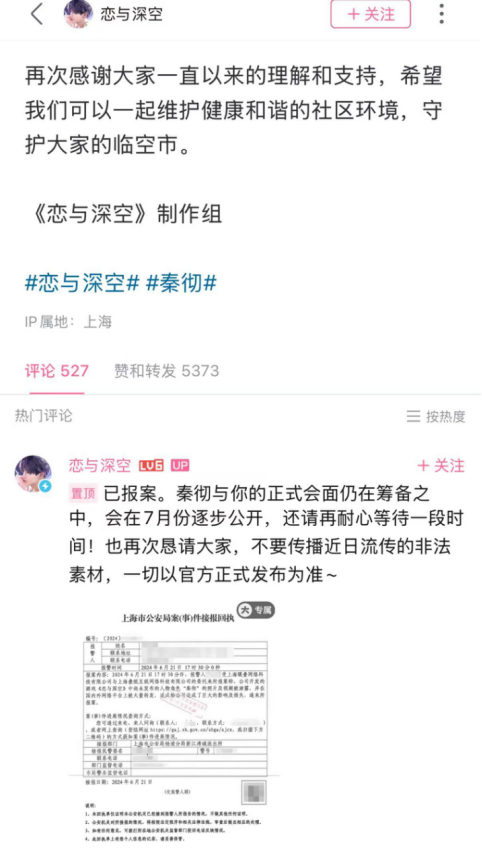
Game content in internal testing phases or test servers typically contains sensitive information that has not yet been publicly disclosed, such as character designs and plot developments. Previously, materials related to the new character Qin Che from Love and Deepspace were leaked prior to the game’s official promotion, resulting in Love and Deepspace releasing a preview PV of Qin Che on Bilibili ahead of schedule on June 21, 2024. In response, the official account of Love and Deepspace strongly condemned the leak on Bilibili and stated that it had reported the incident to the police. In practice, the premature disclosure of game content not only causes commercial losses to game companies, but may also affect the game’s market performance upon official release, while simultaneously undermining player expectations and experience.
This article takes the case of miHoYo’s Honkai: Star Rail as a starting point. By combining the measures previously adopted by miHoYo, it analyzes how game companies can respond to the premature leaking of game content and provides relevant legal and practical strategies for reference.
Case Background
On April 26, 2023, Honkai: Star Rail was launched simultaneously worldwide and received an enthusiastic response upon release. Prior to the launch of subsequent new versions, miHoYo recruited multiple players to participate in pre-release testing of the game. The participating players signed Confidentiality Agreements covering undisclosed game content.
From October 2023 to February 2024, one of the testing participants, Chen (surname), visited the game testing facility on eight occasions to participate in testing. During this period, Chen brought his own electronic devices and secretly recorded and photographed the test content. He subsequently disclosed the secretly recorded game testing content to third parties on multiple occasions.
On March 22, 2024, miHoYo YingTie filed a pre-litigation application for behavior preservation with the Pudong New Area People’s Court of Shanghai on the grounds that undisclosed game character designs might have been leaked in advance. The court issued a ruling within 48 hours in accordance with the law [Case No.: (2024) Hu 0115 Xing Bao 2], ordering the respondent Chen to refrain from disclosing, using, or permitting others to use any game content that he had unlawfully recorded during participation in game testing.
On April 19, 2024, miHoYo YingTie initiated litigation before the Pudong Court, requesting that the court order the defendant Chen to immediately cease unfair competition acts infringing the plaintiff’s trade secrets, compensate economic losses in the amount of RMB 500,000, and publish a statement to eliminate adverse effects. The defendant Chen argued that the game characters at issue had already been publicly disclosed prior to testing and therefore did not fall within the scope of trade secret protection.
Court’s Opinion
In the case concerning whether undisclosed game characters in Honkai: Star Rail constituted trade secrets [Case No.: (2024) Hu 0115 Min Chu 38294], the court’s reasoning and judgment were as follows:
(I) Judicial Reasoning
Determination of Commercial Value
The court held that continuous dynamic game visuals composed of elements such as in-game character appearances and skill execution effects, as well as related skill data, constitute one of the core competitive strengths of game rights holders. Such content should fall within the scope of trade secret protection and is capable of generating direct, actual, or potential commercial value.
Determination of Confidentiality
With respect to confidentiality, the court held that the Confidentiality Agreements signed between miHoYo and the testing players should be regarded as confidentiality measures. Measures such as arranging designated offline testing facilities, recording visitor information, installing surveillance equipment, and providing designated areas for storing mobile phones and other devices were, under normal circumstances, sufficient to prevent the leakage of trade secrets. These measures demonstrated that the rights holder had adopted corresponding confidentiality measures for the information at issue.
Based on the foregoing, the court determined that the game character designs, skills, and test gameplay footage at issue constituted trade secrets protected under the Anti-Unfair Competition Law. Chen’s conduct violated confidentiality obligations by obtaining, disclosing, and allowing others to use the content through theft, thereby constituting infringement of miHoYo’s trade secrets.
(II) Judgment Result
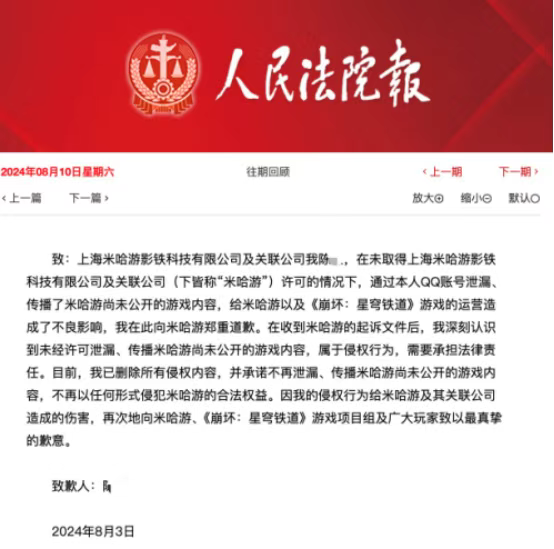
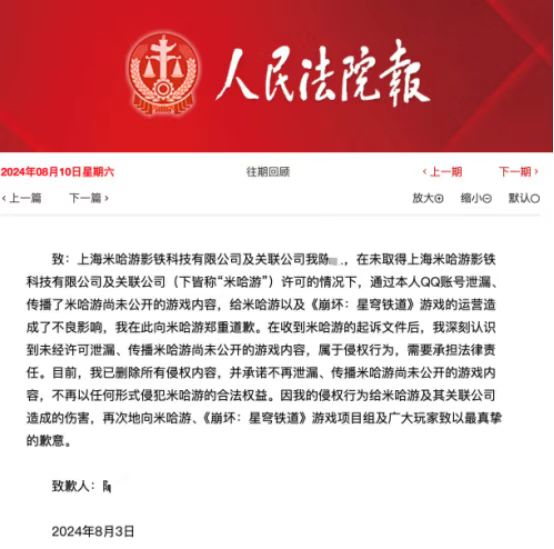
The court ruled that the defendant Chen shall immediately cease unfair competition acts infringing the plaintiff’s trade secrets from the effective date of the judgment; compensate the plaintiff for economic losses and reasonable expenses incurred in stopping the infringement, totaling RMB 500,000; and publish a statement to eliminate adverse effects within thirty days from the effective date of the judgment, with a publication duration of no less than thirty days.
After the judgment, the defendant stated that he accepted the ruling and would not appeal.
Experience Analysis and Practical Takeaways
When handling incidents involving the premature leakage of game content, game companies may adopt the following strategies:
(I) Execute Confidentiality Agreements in Advance
Game companies should sign Confidentiality Agreements with participants prior to internal testing, clearly stipulating the scope of confidential information, confidentiality period, and liability for breach. Such agreements not only provide a legal basis for protection, but also serve as key evidence for pursuing breach liability in the event of a leak. In this case, the court recognized the Confidentiality Agreements signed between miHoYo and the testing players as one of the confidentiality measures.
(II) Implement Necessary Confidentiality Measures During Testing
Taking necessary measures to prevent information leakage during testing also assists in subsequent determinations of whether leaked game content constitutes a trade secret. Trade secret cases typically examine three elements: secrecy, value, and confidentiality measures. Even where information is secret and valuable, the absence of confidentiality measures makes it difficult to recognize it as a trade secret. In this case, the court found that miHoYo’s measures—including designated offline testing rooms, visitor recordkeeping, surveillance equipment, and designated storage areas for mobile devices—were sufficient under normal circumstances to prevent leakage, thereby confirming that appropriate confidentiality measures had been adopted.
(III) Timely Application for Preservation Measures
Given the urgency of game content leaks, failure to promptly stop such conduct may result in irreparable harm. Accordingly, companies may apply for preservation measures as appropriate. In this case, the Pudong Court became the first in China to explore protecting undisclosed game characters under trade secret law, and accordingly issued a pre-litigation behavior preservation ruling to prevent the expansion of negative impact.
(IV) Criminal Reporting
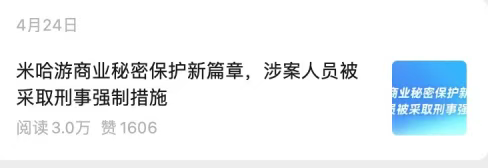
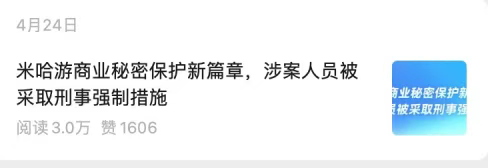
In addition to civil enforcement measures, game companies may also report illegal acquisition and dissemination of trade secrets to the police. Previously, miHoYo cooperated closely with law enforcement authorities to pursue criminal enforcement against acts infringing trade secrets, thereby achieving a strong deterrent effect.
In summary, when responding to material leaks, game companies should actively utilize legal measures to protect their legitimate rights and interests. Prior to incidents, companies may clarify confidentiality obligations through confidentiality agreements and strengthen the legal basis for protection by establishing the trade secret nature of leaked content. After incidents occur, timely evidence preservation and criminal reporting may effectively curb leaks. These measures help safeguard commercial interests and market competitiveness, provide effective evidence for holding leakers accountable, establish that undisclosed game content constitutes trade secrets, and serve as a deterrent warning.